

Part Three — The Reckoning
Four decades passed before the truth about Christie Lynn Mullins. For decades in which a fourteen-year-old girl’s murder remained unresolved—not because the answers were unknowable, but because they were not pursued with the urgency and care she deserved.
Christie was abducted, sexually assaulted, and brutally murdered on August 23, 1975, behind the Graceland Shopping Center in Columbus, Ohio. What followed was a series of investigative failures that diverted attention away from credible leads and placed it instead on a vulnerable man who could not protect himself.
A False Resolution
Within days of the murder, police arrested Jack Allen Carmen, a 26-year-old man with significant developmental disabilities. Carmen confessed after detectives reportedly treated him kindly—a confession later challenged by the ACLU, which argued that he did not understand his constitutional rights and had an IQ of approximately 50.
Despite pleading guilty, Carmen was granted a new trial. Evidence presented at his retrial demonstrated that he was likely incapable of committing the crime within the established time frame. Witnesses placed him at a Volunteers of America shelter at the time of the murder, and testimony established that he struggled to navigate the city independently. In 1977, Carmen was acquitted of all charges.
The real damage, however, had already been done. Years were lost. Momentum vanished. And the investigation never fully recovered.
The Man Who Was Believed

Central to the original case was Henry H. Newell Jr., a man who inserted himself into the investigation early, claiming he and his niece had seen a suspicious figure in the woods shortly after Christie disappeared. Newell provided police with a detailed description that helped generate a composite sketch—one that ultimately led to Carmen’s arrest.
At the time, Newell was treated as a helpful witness. That trust was never meaningfully re-examined.

Cracks in the Story
In 1977, Newell was convicted of arson for burning down his own home to collect insurance money. Reporters later uncovered that he had two prior arson convictions for similar crimes—information that had not been fully weighed when he was treated as a credible witness in a murder investigation.
That same year, during Carmen’s retrial, family members of Newell contradicted his account of events. A friend of Newell’s testified that Newell had confessed to killing Christie, stating that he had “only intended to knock her out.”
Still, no charges were filed.
The Voice That Came Later

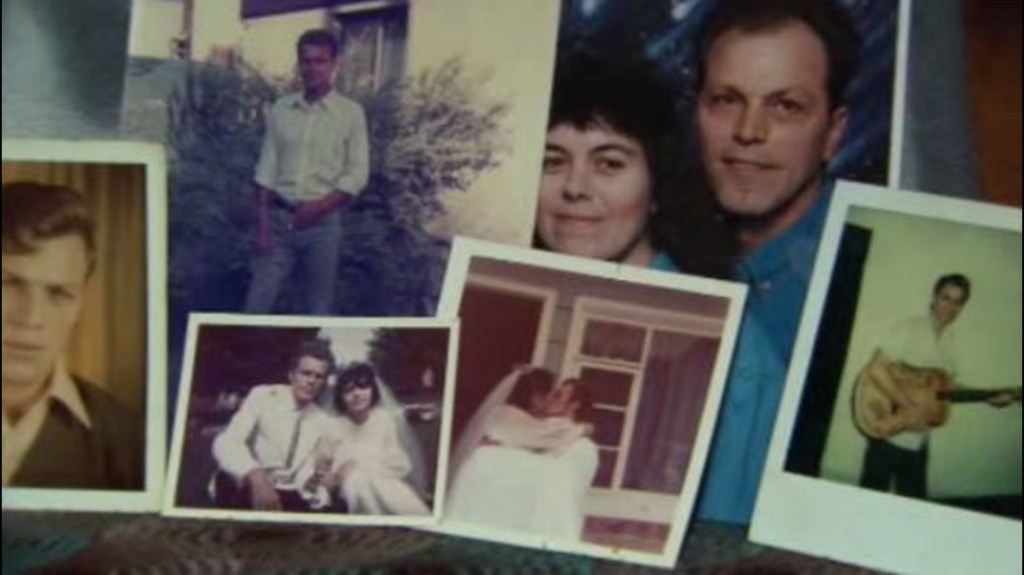
Years later, Pam Brown , Newell’s niece, came forward. Brown stated that she believed her uncle was responsible for Christie’s murder and described him as a violent man who terrified her. She explained that fear—rooted in his behavior and criminal history—kept her silent for years.
Her account did not stand alone. It aligned with Newell’s documented pattern of violence, the contradictions in his original statements, and the testimony that emerged during Carmen’s retrial. Brown’s delayed disclosure reflected a reality well-documented in cases involving violent family members: fear silences witnesses long before time does.
A Belated Admission
In November 2015, after a renewed cold-case investigation, the Columbus Police Department publicly acknowledged what Christie’s family had believed for decades: Henry H. Newell Jr. murdered Christie Lynn Mullins.
Newell was deceased by the time of the announcement. No arrest would ever be made. No trial would ever take place.
Police issued an apology to the Mullins family, citing “shoddy” investigative work that allowed Newell to remain free for more than forty years while an innocent man lost years of his life to a system that failed both him and Christie.
What Justice Should Have Been
Justice should have prevailed in 1975—when a child was taken.
Justice should have prevailed when warning signs were ignored.
Justice should have prevailed when a vulnerable man was used to close a case instead of solve it.
Instead, justice arrived decades late, stripped of consequence, and offered only in acknowledgment.
Christie Lynn Mullins deserved more than remembrance. She deserved urgency. She deserved protection. She deserved truth when it still mattered.
This case is now closed.
The harm it represents should not be.
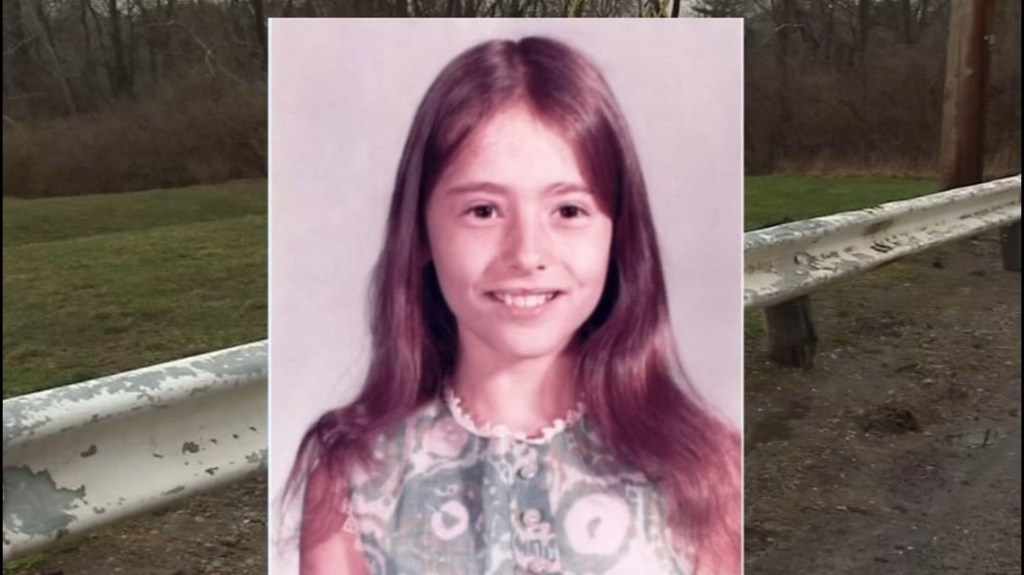
In Memory of Christie Lynn Mullins (1960–1975)
May telling her story ensure that silence never again outweighs justice.
Sources & Resources:
- https://www.law.umich.edu/special/exoneration/Pages/casedetailpre1989.aspx?caseid=44
- https://people.com/christie-mullins-murder-columbus-ohio-niece-held-uncle-secret-decades-11704774
-L.W.
 True Crime & spooky Stories
Leave a comment